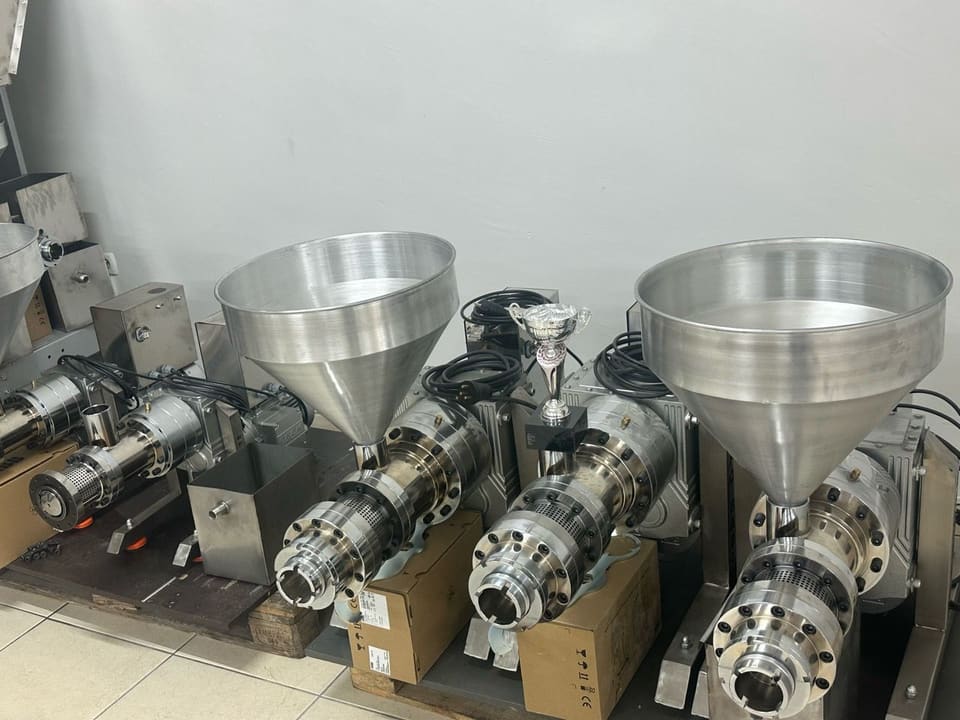
CSP-LINE Modular Cold Press Oil Production Line
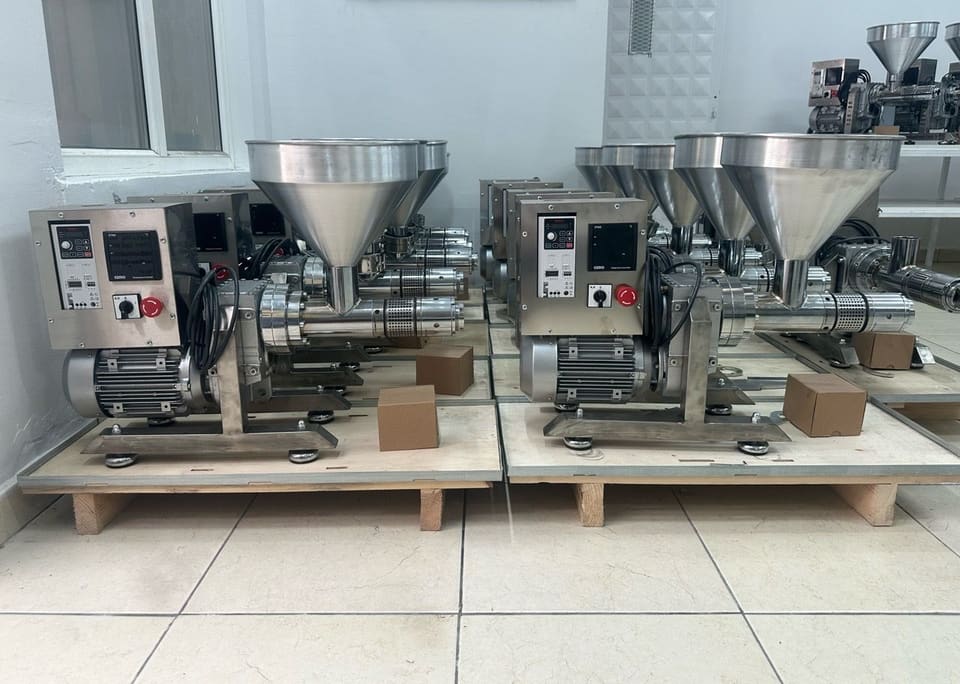
CSP-LINE
CSP-LINE modular cold press oil production line: several presses in sequence for continuous output, multi-seed running and staged scaling. Request a quote.
Configuration quoted per project.
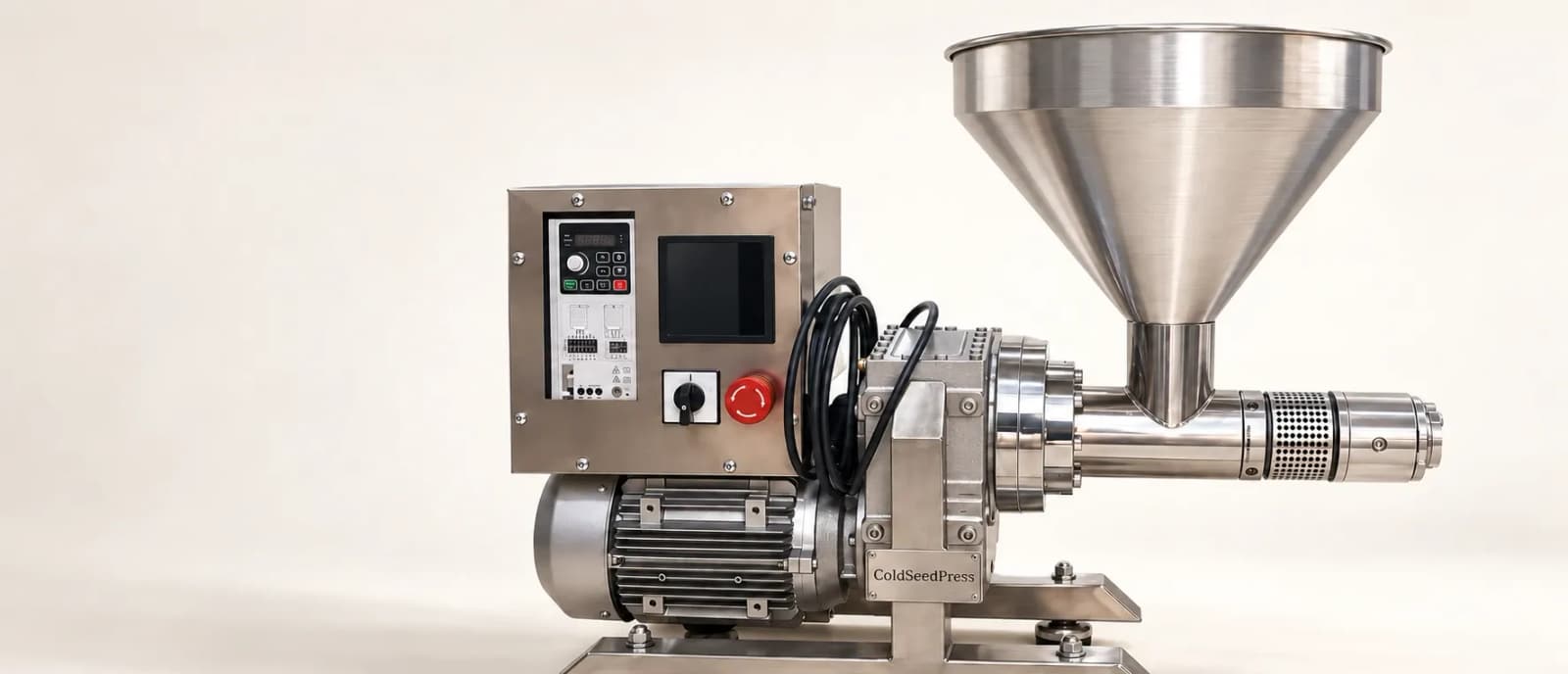
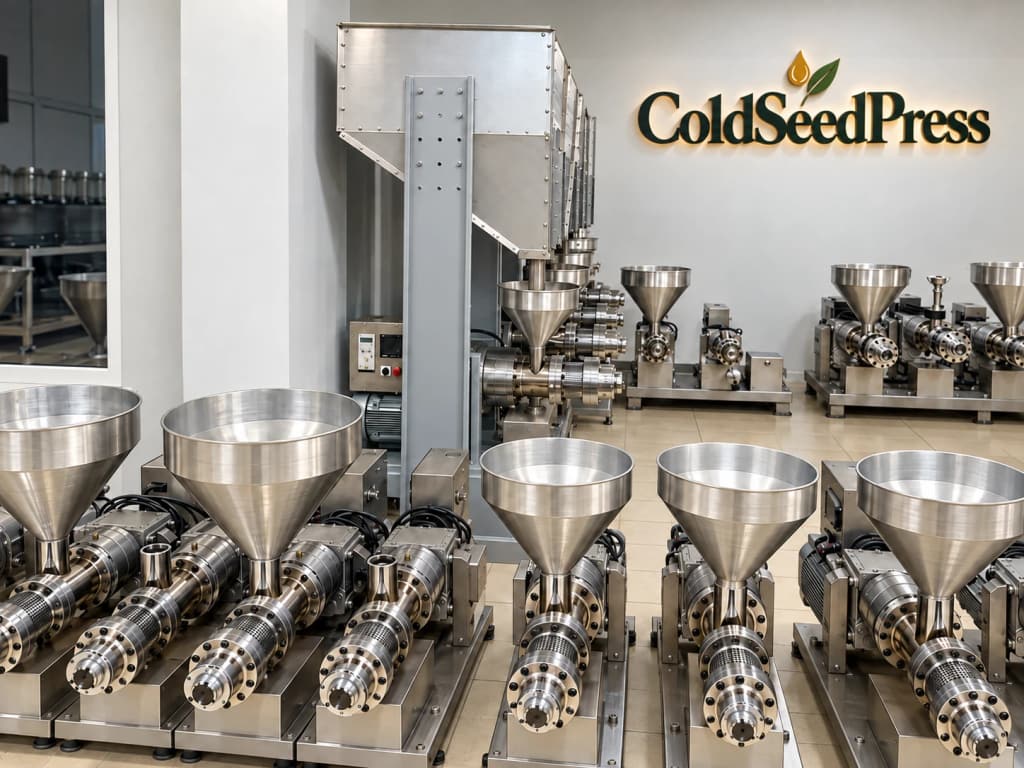
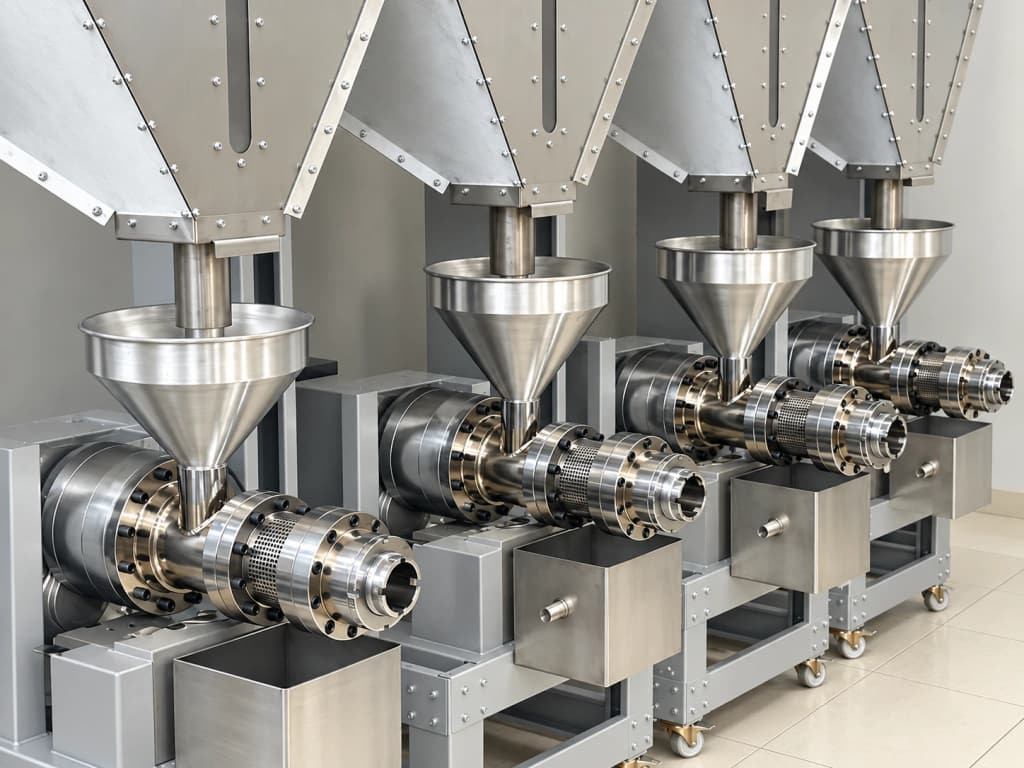
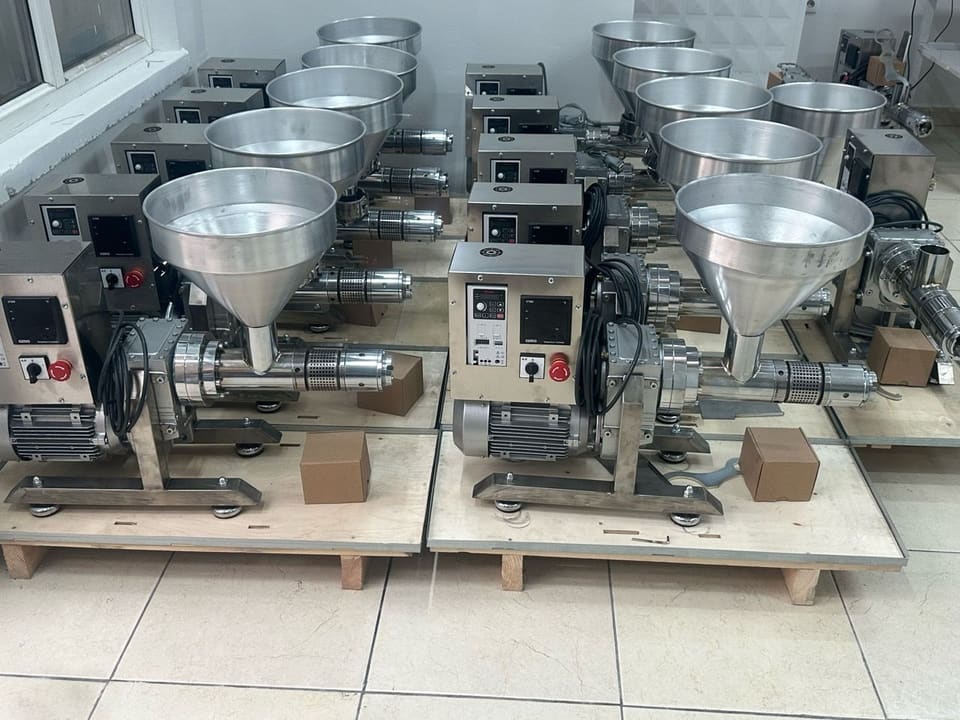
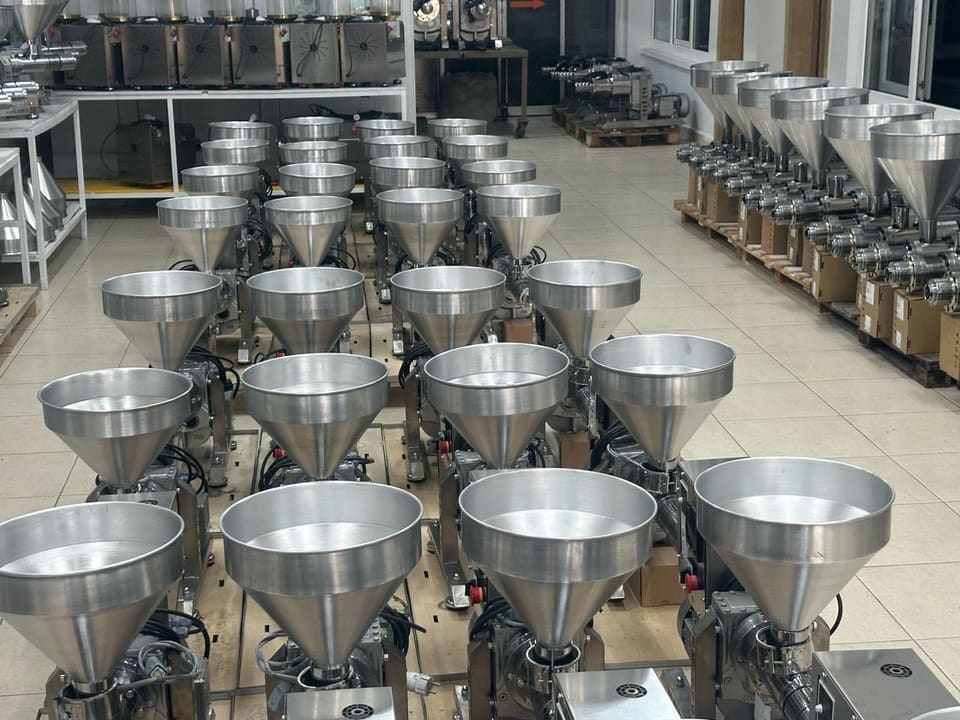
CSP-LINE is a modular cold press oil production line built from two, four or more presses working in sequence rather than one large machine. It is intended for oil mills, food producers and distributors who need continuous output and who cannot afford to stop pressing when a single machine goes down for cleaning or service. Each line is configured around the seeds you press, the volume you need per day and the electrical supply available at your site. Because the configuration is defined per customer, there is no fixed specification sheet for CSP-LINE — the line is quoted after we understand your production plan.
What you can produce with it
A line produces the combined output of the presses installed in it. That is the simple part. The commercial difference is how that output behaves over a working day.
With one machine, every stop is a full stop. Cleaning between seed types, a worn part, a routine service — production goes to zero. With a line, you take one press out of service and the rest keep running. For a small producer working one shift, this is the difference between a predictable daily quantity and a quantity that depends on whether anything went wrong that week.
A line also lets you press more than one product at the same time. One group of presses can run sesame while another runs black cumin, with no cleaning changeover between batches. If you sell several oils, this removes the scheduling problem that limits most single-machine operations.
Finally, a line scales in stages. You install what your current orders justify, then add presses as demand grows, instead of buying capacity you are not yet using. Tell us your target daily volume and your shift pattern, and we will propose a configuration in the quote.
Power supply
Check your electrical supply before you order. This is the most common and most expensive mistake in export machinery purchases, and it is entirely avoidable.
The presses in our range are not all the same. The smaller models run on 220V single-phase supply, which most workshops and small food production sites already have. The largest model requires 380V three-phase supply. A line built from several presses therefore has a total electrical requirement that depends on which models are in it, and a line built around the largest press will need three-phase power at the installation point.
Before you request a quote, confirm three things with your electrician: the voltage available at the machine location, the frequency of your grid, and the total load your existing circuit and breaker can carry. Tell us all three. If your site has only single-phase supply, say so — we will configure the line accordingly rather than sending you machines you cannot legally or safely connect. Converting supply after delivery, or running a transformer as a permanent fix, costs more than getting the specification right at the order stage.
Cold pressing and cake residue
Cold pressing means the seed is pressed mechanically without external heat treatment applied to raise oil release. The oil keeps its natural aroma and colour, and it can be sold as cold pressed, which is the market position most buyers of these machines are targeting.
Residual oil in the cake is the number that decides whether the process is profitable. It is the share of oil that stays behind in the pressed cake instead of coming out as oil. Lower residue means more oil recovered from every kilogram of seed you buy. Since seed is the largest running cost in any oil mill, a small difference in residue changes your margin on every batch, permanently.
The cake itself is not waste. Pressed cake from a cold press is dry and stable, and it is normally sold on as animal feed or, for some seeds, into food use. That gives you a second revenue line from the same input. Each press model in our range has its own stated residual oil figure in its specification — those are the figures to compare when you plan the economics of a line.
Seeds
The presses used in a CSP-LINE configuration are stated to handle black cumin (nigella), sesame, flax and linseed, safflower, sunflower, pumpkin seed, walnut, almond, chia, hazelnut, peanut, canola and rapeseed, tea seed, argan, avocado, coconut and copra, soy, hemp seed, and passion fruit seed.
Actual throughput is not the same for every seed. A hard, low-oil seed moves through a press differently from a soft, oily one, and moisture content in your particular crop changes the result again. Harvest, storage and drying all affect it. For this reason we do not publish per-seed output figures — any such number would be wrong for someone.
If you send us a sample of the seed you intend to press, we can test it and tell you what to expect. That is the honest way to size a line, and we recommend it before you commit to a configuration.
What to check before you order
Work through this list before you sign anything, with us or with any supplier.
Electrical. Voltage, phase and frequency at the installation point, confirmed by your electrician and stated in writing on the order. Plug and cable type for your country.
Spare parts. Ask which parts are considered wear parts, how they are replaced, and whether a spare set can ship with the machines. On a line this matters less for downtime and more for cost planning — you want the wear items in stock before you need them.
Documentation. Ask for the technical file, wiring diagram, operating manual in a language your operators read, and the declarations and test documents your own customs authority and food regulator require. Import rules for food machinery differ by country. Confirm with your customs broker what your port will ask for, then request exactly that. Do not assume a document exists because it is common elsewhere.
Installation and layout. Confirm floor space, floor loading, and the working clearance around each press for cleaning and service. A line needs room to remove one machine from service while the others run.
Packing and shipping. Ask how the machines are packed, what the packed dimensions and weights are, which Incoterm the quote uses, and who is responsible for insurance and customs clearance. Confirm the port of loading and whether the shipment goes as a container load or as loose cargo.
Commissioning and training. Agree in advance how the line will be started up and who trains your operators, and how support is handled after delivery.
To get a configured line proposal for your seeds, your daily volume and your electrical supply, request a quote and tell us those three things — we will build the specification around them.