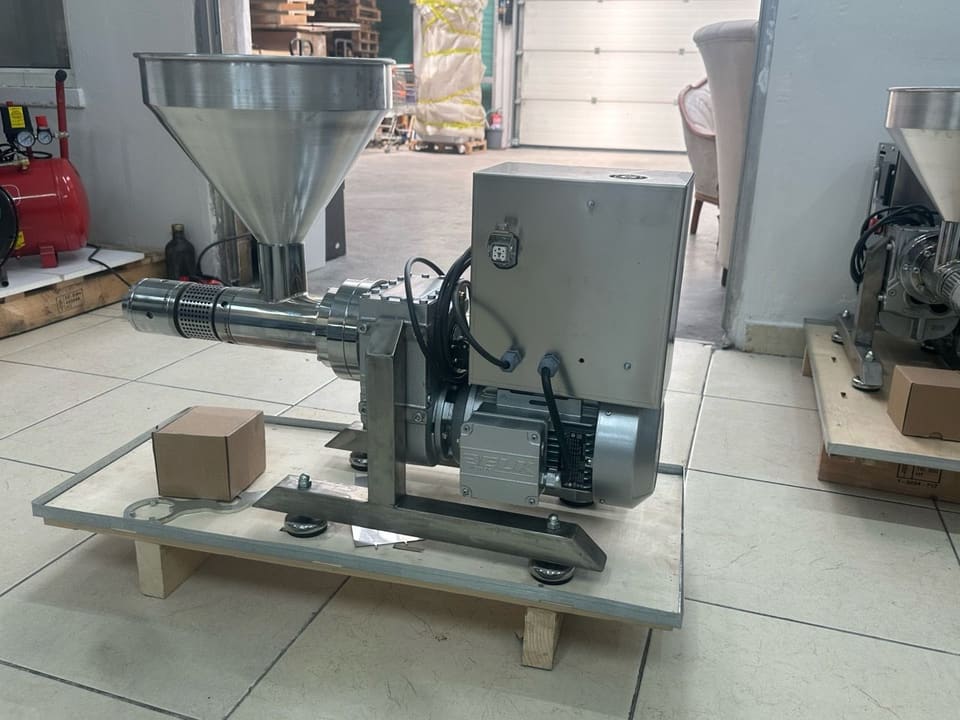
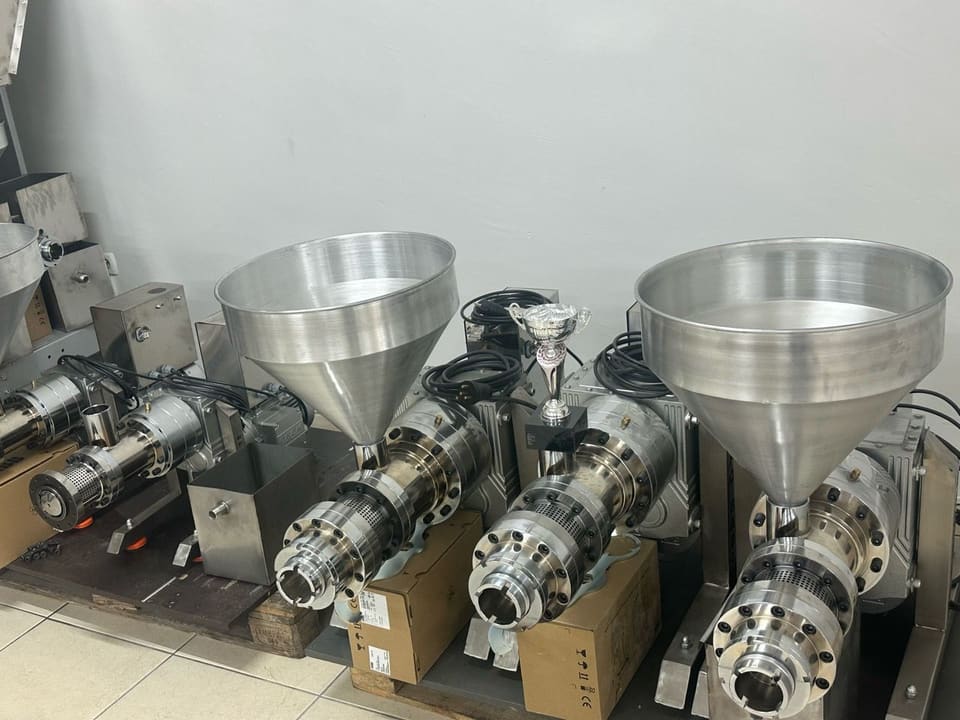
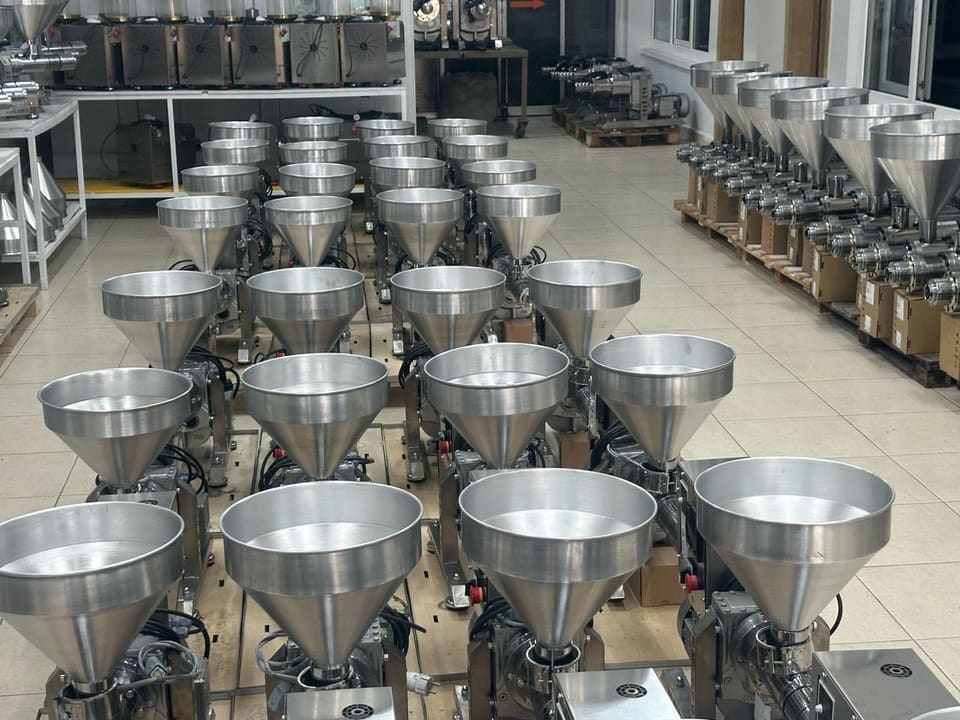
CSP-10 Cold Press Oil Machine
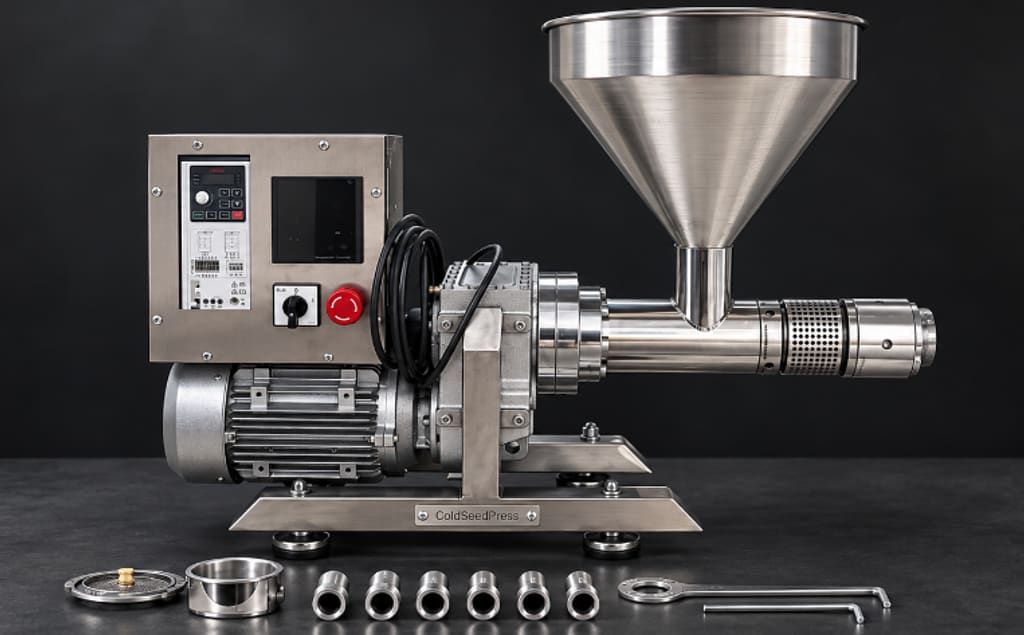
Cold press oil machine
CSP-10
Built for your production scale
- Efficient throughput
- 8–10 kg/h
- Rated daily capacity
- 240 kg / 24 h
- Operating power draw
- 400–850 W
- Residual oil in cake
- ≤6%
Manufacturer-stated figures
CSP-10 commercial cold press oil machine by ColdSeedPress. Single-phase 220V, steady daily output for black cumin, sesame, flax and more. Request a quote.
CSP-10 cold press oil machine
The CSP-10 is a small commercial cold press for producers who have outgrown occasional batch work and now need output every day. It is a screw (expeller) press: seed is fed in, pressed mechanically, oil runs out one side and dry cake out the other. It still runs on a single-phase 220V supply, so most workshops, farm buildings and small food units can install it without electrical work. It is built for operators who sell what they press — small bottlers, cosmetic ingredient suppliers, farm cooperatives and specialty oil producers.
What you can produce with it
Efficient throughput is 8-10 kg of seed per hour. Over a normal eight-hour working shift that is roughly 64 to 80 kg of seed processed by one operator, and the machine is rated for 240 kg over a full 24-hour run if you work in longer shifts or across two shifts.
For a small producer, that changes the nature of the business. A single shift covers a weekly market stall, a regular retail order, or a steady supply agreement with one or two customers. Two shifts a day, or a continuous run, moves you into contract volumes. The important point is predictability: the CSP-10 gives you a daily number you can plan around and quote against, instead of pressing whenever the previous batch runs out.
Feed rate can be pushed above the efficient band, but the efficient band is where oil separation and cake quality are best. Plan your production on the efficient figure, not the maximum.
Power supply
The CSP-10 is a 220V single-phase machine. This is the single most common and most expensive mistake in export orders, so check it before you order.
Single-phase means the press connects to an ordinary two-wire supply, the kind found in homes, shops and small workshops. Three-phase is an industrial supply with three live conductors, usually installed at a mill, factory or larger facility. They are not interchangeable. A three-phase machine cannot simply be plugged into a single-phase socket, and a single-phase machine connected incorrectly to a three-phase supply will be damaged.
Two things to confirm on your side:
- Voltage. Your nominal supply voltage as measured at the socket, not the figure printed on a neighbouring appliance. Supply in many markets sags below nominal during peak hours.
- Frequency. Grids run at either 50 Hz or 60 Hz depending on the country. Tell us your frequency when you request a quote so the motor supplied matches your grid.
The motor rating is 1.5 kW and the heating element adds 0.6 kW, but actual running draw during pressing sits well below the combined rating. That matters if you run on a generator or a shared circuit: size your supply from the running draw range in the specification table, and add margin for start-up current, which is always higher than running current.
Cold pressing and cake residue
Cold pressing means the seed is not roasted or chemically treated before extraction. The oil comes out by mechanical pressure alone, which preserves the aroma, colour and character that buyers of specialty oils pay for. The small heating element is there to bring the press head to a stable working temperature so the machine runs consistently, not to cook the seed.
The number to watch commercially is residual oil in the cake. For the CSP-10 this is stated at 6% or below. Every kilogram of seed you buy leaves as two products: oil and cake. Lower residual oil means more of what you paid for ends up in the bottle rather than staying locked in the press cake. Over a year of daily production, a few percentage points of residue is a real difference in revenue against the same seed cost.
The cake itself is not waste. Cold-pressed cake is normally sold on as animal feed, and depending on the seed it can also go into food or cosmetic ingredient use. A press that leaves the cake dry and firm gives you a second sellable product from the same input. Ask your local feed buyers what moisture and oil content they accept before you plan around cake sales.
Seeds
The CSP-10 is stated to handle black cumin (nigella), sesame, flax and linseed, safflower, sunflower, pumpkin seed, walnut, almond, chia, hazelnut, peanut, canola and rapeseed, tea seed, argan, avocado, coconut and copra, soy, hemp seed, and passion fruit seed.
Throughput is not the same for every seed. A hard, low-oil seed presses differently from a soft, oily one, and moisture content changes the result on the same seed from the same field in a different season. Oil content, shell content and how well the seed has been cleaned all affect how fast the press works and how dry the cake comes out.
We do not publish per-seed figures, because a figure produced on our seed would not describe yours. If you have one main seed, send us a sample and we will test it on the machine and report what we see. That is a better basis for a purchase decision than any table.
What to check before you order
A short checklist for importers. Most of these are questions to ask any supplier, not just us.
Electrical
- Confirm your measured supply voltage and your grid frequency in writing before the order is produced.
- Confirm the plug and connection type used in your country, and whether you need the machine supplied without a plug for local fitting.
- If you will run on a generator, confirm the generator’s continuous rating against the machine’s running draw, with margin for start-up.
Spare parts and service
- Ask which parts are consumable and wear out with normal use, and order a first set with the machine. Shipping a single small part later costs more than sending it in the original crate.
- Ask whether there is any local technician support in your market, and what remote support looks like if there is not.
- Ask what tools are required for routine cleaning and part changes, and whether they are included.
Documentation to request
- An operating manual in a language your operators read.
- An electrical schematic and motor data plate details.
- A parts diagram with part references, so you can order by reference instead of by description.
- Ask the supplier what conformity or test documentation they can provide for your import route, and check separately with your own customs broker what your country actually requires for imported food machinery. Requirements differ by market, and your broker is the authority on your side, not the supplier.
Packing and shipping
- Ask for crated dimensions and gross shipping weight, which are larger than the machine’s own dimensions and net weight.
- Confirm the incoterm on the quote so you know where your cost begins.
- Confirm whether the crate is suitable for your transport route and any wood treatment requirement at your port.
- Ask what happens if the crate arrives damaged, and photograph the crate before opening it.
Commercial
- Get the model, voltage, frequency and included accessories written into the proforma invoice. Verbal agreement is not enough across a language and time-zone gap.
To get a specification and a quote for the CSP-10 in your voltage and frequency, send us your seed type and your target daily output and request a quote.