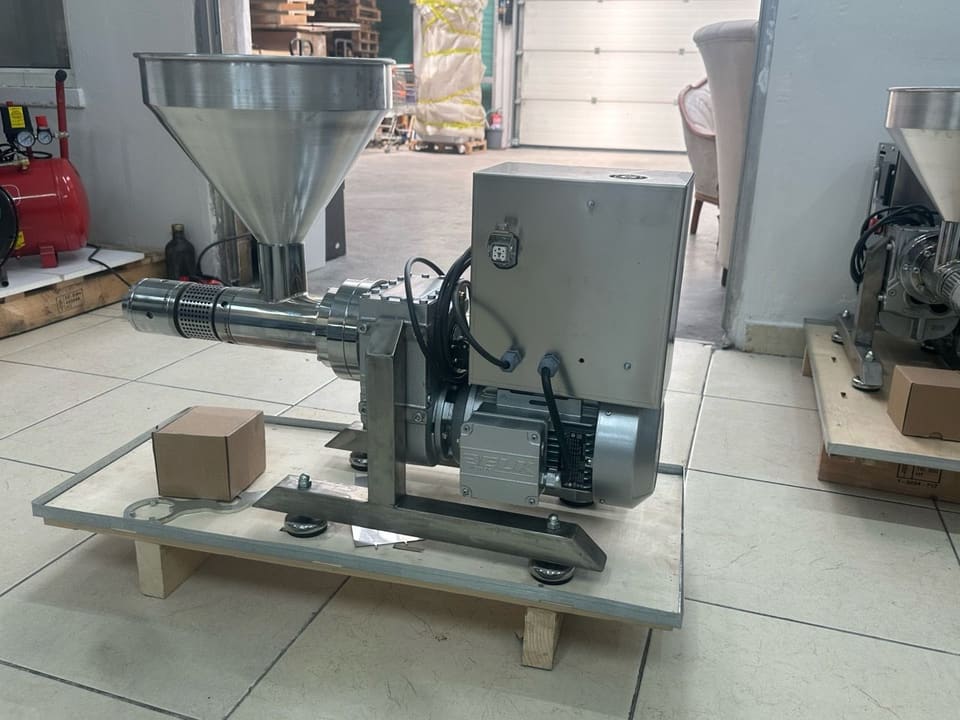
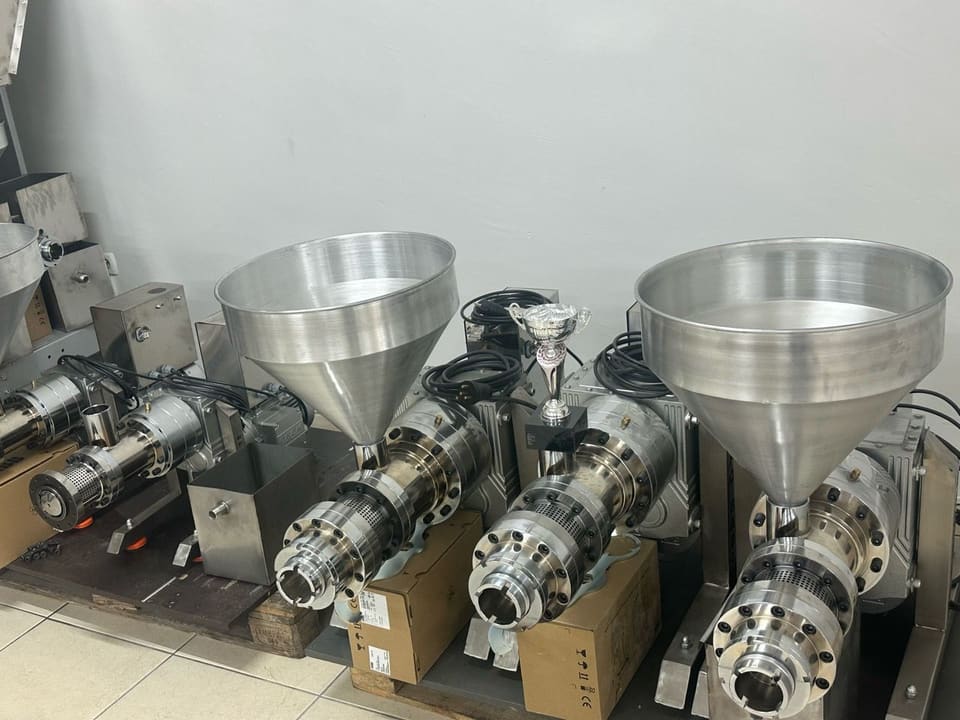
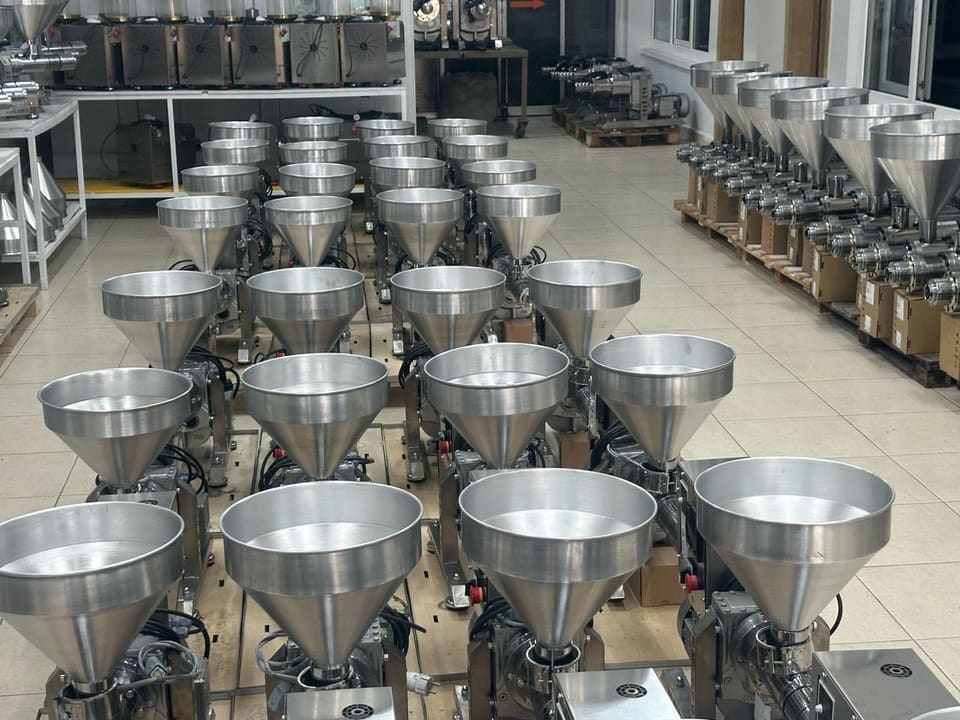
CSP-5 Cold Press Oil Machine
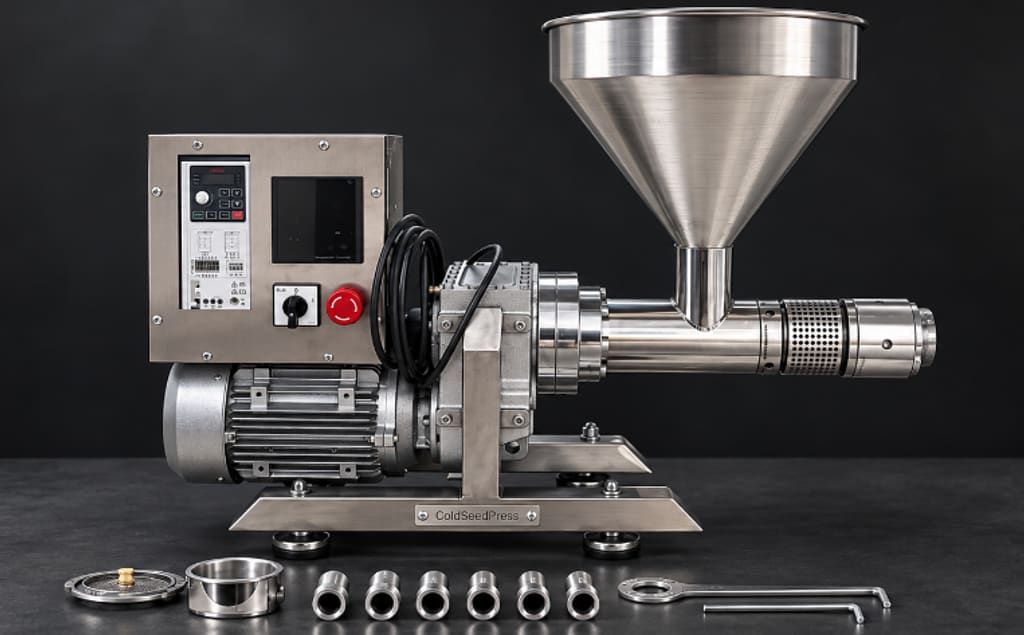
Cold press oil machine
CSP-5
Built for your production scale
- Efficient throughput
- 3–5 kg/h
- Rated daily capacity
- 120 kg / 24 h
- Operating power draw
- 200–450 W
- Residual oil in cake
- ≤6%
Manufacturer-stated figures
CSP-5 cold press oil machine from ColdSeedPress. Entry-scale screw press on 220V single-phase mains, for farm shops, startups and seed trials. Request a quote.
The CSP-5 is the entry model in our cold press range. It is a screw (expeller) press built for boutique production: a farm shop pressing its own harvest, a specialty oil brand starting a first product, a laboratory or R&D bench, or a larger producer that wants to test an unfamiliar seed before committing to a bigger machine. It runs on ordinary single-phase mains, so it can be installed in places where three-phase power is not available.
What you can produce with it
The efficient working rate is 3-5 kg of seed per hour. Over a normal eight-hour working shift that is roughly 24 to 40 kg of seed processed, depending on the seed and how the machine is fed. Run continuously around the clock and the rated figure is 120 kg of seed in 24 hours.
For a small producer, that is the scale of a weekly market run, a subscription box, a hotel or restaurant supply contract, or a pilot batch for a retail buyer who wants to see the product before placing a real order. The wider input range of 1-20 kg/h describes what the machine will physically accept, not what it will hold hour after hour. Size your plan on the efficient rate, not the maximum.
If your sales plan already needs more than a shift’s worth of seed every day, look at the larger models instead. Undersizing a press is a common reason a new producer ends up running a machine continuously and wearing it out early.
Power supply
The CSP-5 is a 220V single-phase machine. This is deliberate: single-phase is what most workshops, farm buildings, kitchens and small units already have, and it removes the need for a three-phase connection or a converter.
Before you order, confirm three things with your electrician and tell us the answers:
- Your mains voltage. Networks vary between countries and sometimes between regions. Tell us your nominal voltage.
- Your frequency. 50 Hz and 60 Hz networks both exist. State which one you are on.
- Your plug and socket type, and the circuit rating. The press draws 200-450 W in operation and the heater is rated separately, so the socket must comfortably carry both together.
This is the most frequent mistake in export orders. A machine that arrives wired for the wrong supply cannot simply be plugged in, and correcting it after shipping is slow and expensive. If your site is three-phase only, say so before ordering and we will tell you what that means for your choice of model.
Cold pressing and cake residue
In a screw press, the seed is squeezed and the oil is separated mechanically. What is left is the press cake. Residual oil in the cake for the CSP-5 is stated at 6% maximum.
That figure matters commercially in two directions. The lower the residue, the more oil you recover from every kilogram of seed you bought, and seed is usually your largest single cost, so recovery is what decides whether a small operation makes money. At the same time, the cake is not waste. Press cake with oil still in it is a saleable by-product: animal feed, and for some seeds a food ingredient such as flour or protein meal. Many small producers treat cake sales as a second revenue line rather than a disposal problem.
Cold pressing also affects the character of the oil itself. Because the seed is not subjected to the high heat of solvent or hot-pressing processes, the flavour, colour and aroma of the seed carry into the oil. That is normally the reason a buyer chooses cold-pressed in the first place, and it is what you sell on the label.
Seeds
The CSP-5 is stated to handle black cumin (nigella), sesame, flax/linseed, safflower, sunflower, pumpkin seed, walnut, almond, chia, hazelnut, peanut, canola/rapeseed, tea seed, argan, avocado, coconut/copra, soy, hemp seed and passion fruit seed.
Actual throughput is not the same for every seed. It changes with the oil content of the seed, its moisture level, how clean it is, the shell or hull, and the ambient temperature in your workshop. A dry, oil-rich seed behaves very differently from a damp or fibrous one. For this reason we do not publish a per-seed table, because a figure that is right for one lot would be misleading for another.
If your seed is not on the list, or if you want to see how your own material behaves before you buy, send us a sample. We can test on request and tell you what we observe.
What to check before you order
A short checklist that saves time on an import:
- Electrical supply. Voltage, frequency, socket type, and the rating of the circuit you will plug into. Confirm this in writing before production of your order starts.
- Spare and wear parts. Ask which parts are consumable in normal use, how they are ordered, and what you should keep on the shelf so a small failure does not stop production. Order the first set with the machine, since shipping one small part on its own later costs more than including it.
- Documentation. Ask for the operating and maintenance manual in a language your staff reads, a parts diagram, the electrical rating plate details, and the packing list. If your country requires specific import or conformity paperwork for food-contact machinery or electrical equipment, tell us what your customs authority asks for and we will discuss what can be provided.
- Materials in contact with the seed and oil. Ask which components touch the product and what they are made of. Your own food authority may want this on file.
- Packing and shipping. Confirm crate dimensions and gross weight for your freight quote, the Incoterm being used, which port or airport you want delivered to, and who handles customs clearance at your end. The CSP-5 is a compact, light machine, which usually makes it straightforward to ship, including by air when speed matters.
- Installation and start-up. Ask what you must prepare on site, who does the first run, and how support is provided after delivery.
Tell us your seed, your target output per day and your mains supply, and we will confirm whether the CSP-5 is the right model for you or point you to a larger one. Request a quote and we will reply with details for your case.